Monday, October 20, 2008

British aid worker killed as Afghan violence spreads

Afghan Policemen investigate the site of incident in Kabul October 20, 2008.
REUTERS/Omar Sobhani
Gayle Williams
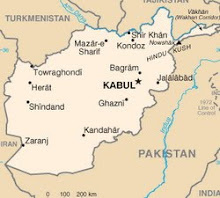
KABUL-Two Taliban gunmen killed a British woman aid worker in the Afghan capital on Monday, accusing her of spreading Christian propaganda, in an attack that could help further restrict humanitarian activities in Afghanistan.Taliban insurgents have increasingly targeted aid workers this year in their campaign to spread an atmosphere of fear and undermine claims by the Afghan government and its Western backers that they are bringing security to the war-ravaged nation."She was walking to work this morning. There were two people on a motorcycle. They got off the motorcycle and shot her and then went away on the motorcycle. She was dead pretty soon afterwards," said Mark Lyth, the board chairman of SERVE Afghanistan, the aid agency which employed the woman.The Taliban claimed responsibility for the attack. "We killed her for spreading Christian propaganda," Zabiullah Mujahid, a spokesman for the militant group, told Reuters by telephone.SERVE Afghanistan is a British-based Christian aid organization focusing on community development and education and training for people with disabilities.
"WAVERING ALLIANCE"
Though NATO insists increased Taliban attacks this year bely its success in weakening the Islamist rebels, targeted Taliban assassinations, suicide and roadside bombs have increased the sense of personal insecurity among Afghans and foreigners alike.A suicide bomber hit a convoy of German troops in the relatively peaceful north of Afghanistan on Monday, killing five children and two German soldiers, a senior police official said....
To read more go to:
PS:Gayle is now strolling the streets of gold in heaven....!!!Thank you Gayle for being brave and obeying the Lord about Afghanistan....!
Please remember to pray for her family and loved ones and for SERVE and all the other aid workers that are there to HELP afghanis...!!!!!
Please pray for all those who were touched by Gayle's life in Afghanistan....!!!!
Pray for the church in Afghanistan!!!!!!
As in the days of Noah....

Sunday, October 19, 2008

Iran feeling the tensions between faith and religious freedoms

Iran-The Iranian Government is being asked to reconsider their highly controversial draft bill on apostasy.Al Janssen with Open Doors says, "The European Union has issued a declaration urging Iran to drop the apostasy bill and also to release Christian converts from prison. So, I'm hoping that other nations will get involved on that and that there will be a lot of pressure put on Iran."According to the declaration, the European Union reportedly "is very concerned at the deterioration in the exercise of freedom of religion or belief, and especially the freedom of worship in Iran where the pressure on people belonging to religious minorities has worsened in recent months."It goes on to say, in part, that "if adopted, that law would be a serious infringement of the freedom of religion or belief, which includes the right to change religion and the right to have no religion. It would violate Article 18 of the International Covenant on Civil and Political Rights, which was freely ratified by Iran, and would threaten the lives of a number of Iranians who have been arrested and held without trial for several months on account of their religious beliefs."Is the declaration effective? Iran's response to the protest of their nuclear threat is telling. But Janssen says it makes a statement to believers, as does a special training course Open Doors is providing.Because the official church is under strict control, personal growth is heavily retarded. Open Doors believes the best way for these Christians to meet for growth, worship and fellowship in safety is to join in independent cell groups."We have been developing, for some time, a discipleship course for Muslim-background believers.They have not grown up in a Christian context; they really are starting from scratch when it comes to discipleship. Those have huge impact on their lives. How do they practice their faith while still remain in an Islamic context?"
Click here if you want more details, or if you can help .

As in the days of Noah...

Violence Against Christians in Orissa:Please call your Representative today!

During these uncertain economic times, it can be hard to focus on issues on the other side of the world. Yet, this is a good opportunity to empathize with and act on behalf of Christians in Orissa who face great physical uncertainties.Recently Congressman Akin introduced a Congressional resolution calling on the Indian government to stop the violence against Christians and to protect religious freedom for Indians of all faiths.We need your help to get more Congressional signatures on this resolution. To be more effective, the resolution needs bi-partisan support. We are partnering with other like-minded organizations to gather more Congressional signatures.Please take a minute to call your Representative’s office and ask him/her to co-sponsor House Concurrent Resolution 434 when Congress reconvenes. This resolution calls on the Indian government to stop violence against Christians in Orissa. You can find your Representative’s phone number here, and a sample phone script here.
From Open Doors USA
As in the days of Noah...

A church in Kenya attacked by Muslim mob

Kenya-A longstanding effort to replace a church with a mosque in Kenya's northern town of Garissa culminated in an attack by 50 Muslim youths this month that left the worship building in ruins.Compass Direct reports the gang stormed the building of Redeemed Gospel Church and pelted the congregation with stones, sending many Christians fleeing while others became embroiled in fistfights.Ten Christians received hospital treatment for minor injuries and were released.Jonathan Racho with International Christian Concern says anti-Christian violence is growing in Northern Kenya. "It's a part of Kenya where Muslims make up the majority, so there is a growing hostility against Christians in these parts, and this is partly because of the growth and influence of Islam elements inside Somalia."Most of the people there are ethnic Somalis.Tensions between Christians and the Muslim-majority population in the semi-desert town of 20,000 people began simmering after Muslims built a mosque next to the church in June 2007. Purchasing its land on Nov. 1, 1999, the church had begun worshipping there by early 2001, eventually growing to 400 members.Church leaders complained to the district commissioner in June 2007 that the new mosque was built too close to the church-only three meters separate the two structures-and that it was blocking the church entryway.The government is striving to avert further incidents by preventing the Christians from returning to the ruined structure, according to a Provincial Police official identified only as Chelimo. With tensions expected to rise during the end of the Muslim holy month of Ramadan, he said police were taking precautionary measures to ensure that the congregation never returned to their property."To allow this would be suicidal," Chelimo told Compass. "We have deployed five security guards every day to make sure that the members of the church will not enter its structure."Racho says Christians are turning to authorities, but "no one in the administration is protecting them. The Christians are not being protected. The people who attacked them are free on the streets. They are not in prison. This is really disappointing."Christians are concerned the more violence is coming, says Racho."The Muslims in Garrisa are openly saying that they are going to destroy other churches, too. So there is no reason why they won't implement what they are saying."International Christian Concern is asking you to contact the Kenyan Embassy and ask them to protect Christians in Northern Kenya.
Here's the Kenya Embassy Contact Information:
Embassy of Kenya
2249 R Street, N.W.
Washington, D.C. 20008
Telephone: (202) 387-6101
http://www.kenyaembassy.com/
As in the days of Noah.....

REMEMBERING RAMI AYYAD Murdered on 10/7/07:Palestinian Christian Stabbed To Death in Hamas Controlled Gaza

Rami Ayyad the director of the Protestant Holy Bible Society in Gaza was stabbed to death and his body dumped in a field near Gaza city;s Zeitoun neighborhood. Since the Hamas takeover in Gaza there have been an increasing number of attacks against Palestinian Christians who comprise a small percentage of the 1.5 million living in the Gaza Strip. Since the outbreak of the Al Aksa intifada seven years ago, thousands of Palestinian Christians have fled abroad. Bethlehem is no longer a predominently Christian city and in the Gaza Strip, the small Christian population has to depend on Hamas security forces to protect them...


PS:Please remember Rami's wife Pauline and children in your prayers....!!!!
As in the days of Noah...

October 7 marked the first anniversary of the murder of Rami Ayyad

Rami Ayyad
Rami Ayyad's Funeral--October 2007
Your prayers and notes of encouragement to Pauline Ayyad, wife of Rami, the manager of the Bible Society Bookshop in Gaza, and their children, Georg, Sam, and 8-month baby girl Wisam, have meant so much to the family.
Continue to encourage this young family by sending them a card or letter, please refer to the Letter Writing guidelines....
As in the days of Noah...

Philippino Christians Fear Failed Pact Increases Risk of Reprisals:Frustrated Muslim demand for larger autonomous region in Mindanao could lead to war

DUBLIN-Militant Islamists in the southern island of Mindanao have stepped up their attacks on majority-Christian villages following the failure of a peace agreement that would have enlarged an existing Muslim autonomous region there.With Muslim commanders of the Moro Islamic Liberation Front (MILF) in the southern Philippines yesterday saying ongoing support from the international community was necessary to prevent a full-scale war breaking out in Mindanao, both Muslim and Christian residents in the disputed territories were fearful of what the future might hold.“The problem is that many people living in these areas don’t want to be part of a Muslim autonomous region,” a source in Mindanao who preferred to remain anonymous told Compass.“The closer you get to these zones, the more nervous people are,” he said. “The town of Kolambugan, where most of the fighting took place in mid-August, became a virtual ghost town for a while. It had a population of 25,000. But people are slowly returning to their homes.”A Christian family from the area said many people were afraid to sleep at night because they kept hearing reports that they would be attacked at midnight.“When MILF forces attack Christian villages, Muslim neighbors are afraid that Christians will retaliate against them, even though they have nothing to do with the violence,” the source added. “This has happened in the past.”He also explained that some moderate Muslims are drawn to support the MILF because the rebels claim the Christians have stolen their ancestral homelands. Communities in Mindanao often struggle with extreme poverty.“If MILF is successful in gaining control over these lands, the people assume that their economic situation will improve,” he said. “So although they want the fighting to stop, they sympathize with the MILF.”While the conflict is primarily political, religion plays a significant role. As a member of the Moro Youth League stated in an Aug. 5 national television interview in the Philippines, “As a Muslim, in order to live in a righteous way, you need to be living under sharia [Islamic] law and with an Islamic government. We believe we have the right to fight for this.”Other Youth League members on the program agreed that sharia was a primary objective of autonomy, and that Islam was the only “real path of doing anything in this world.”
Violence Erupts
Some 2,000 MILF supporters yesterday held a protest march in Marawi city, Lanao del Sur, appealing to the United Nations and the Organization of the Islamic Conference to compel the Philippine government to revive the aborted peace agreement that would have enlarged the existing Muslim autonomous region in the south.Breakaway MILF commanders on Aug. 18 attacked several majority-Christian villages after the Supreme Court prevented the Aug. 5 signing of the Memorandum of Agreement on Ancestral Domain (MOA-AD). The agreement potentially would have given the MILF power to establish an Islamic state governed by sharia law.Christian leaders in Mindanao appealed to the Supreme Court when they realized that if they voted against inclusion in the proposed Bangsamoro Juridical Entity (BJE), their majority-Christian villages would become small islands in the midst of MILF-administered territory. As a result, they feared, they would be forced to move elsewhere.Incensed by the 11th-hour stalling of the agreement, three MILF commanders on their own initiative led attacks against towns in North Cotabato and Lanao del Norte provinces on Aug. 18, burning homes, seizing livestock and killing at least 37 people. Another 44,000 residents immediately fled the area.When some Christian residents armed themselves in defense, Secretary of Interior Ronaldo Puno warned that anyone carrying weapons would be disarmed.The MILF has only 11,000 active fighting men, according to local estimates. But by Aug. 20, the National Disaster Coordinating Council had reported a total of 159,000 people displaced by the rebel attacks.The Philippine army quickly retaliated, sweeping villages in an attempt to seize the rebel commanders.After two weeks of violent clashes, the Philippine government officially abandoned the MOA-AD. Spokeswoman Lorelei Fajardo said President Gloria Macapagal-Arroyo would seek a new agreement based on consultation with legislators and local politicians rather than negotiations with the MILF.Furthermore, the government would concentrate on the “disarmament, demobilization and rehabilitation” of MILF cadres, Fajardo said.In response, MILF leaders rejected any renegotiation of the peace deal with Arroyo’s administration.
Overcoming Prejudice
An opinion piece in the Wall Street Journal (WSJ) on Aug. 7 stated that the MOA-AD would only reinforce prejudices between Christian and Muslim communities.Under the agreement, WSJ claimed, the government would further divide Mindanao into Muslim and Christian enclaves, increasing the likelihood of territorial disputes. Separating Muslims from the rest of Philippine society, it stated, would encourage a vision already held by MILF to help create a pan-Islamic state covering several countries in the region, including Malaysia, Indonesia and Singapore.
Finally, the WSJ said, less Philippine control of Mindanao would “invite even more terrorist activity in an area that already has strong ties to al Qaeda.”While there are proven terrorist leanings in groups such as the MILF and the Abu Sayyaf, not all area Muslims approve of or engage in such activities.Camilo Montesa, a key figure in peace negotiations, in his blog on Aug. 30 described an encounter with a young man who believed that Muslim residents would readily seize property from Christians once the BJE were formed.Others told Montesa that, “Muslims were scouting and marking the big houses of Christians in Cotabato and staking a claim over them in anticipation of the signing of the peace agreement.”“The hearts and minds of the people are the battlefields, and not some hill or base camp,” Montesa concluded. “There is a limit to what arms and war can produce ... It is unfortunate that we are so divided as a people at this point in our national life.”
Reclaiming ‘Ancestral Domains’
As Islamic identity strengthened in the Middle East after World War II – and as many Philippine Muslims traveled to study in Middle Eastern countries – certain sectors of the Bangsamoro population became committed to reclaiming “ancestral domains.”Their claims dated back to the rule of the Sultanate of Sulu, which existed prior to Spanish colonial rule in the 1500s, and the establishment of the Commonwealth of the Philippines in 1935. When the last sultan died in 1936, the fledgling Philippine government refused to recognize his heir, effectively eradicating the traditional Bangsamoro power base.When the Philippines became a republic in 1946, its constitution allowed for the establishment of an autonomous region in Muslim Mindanao. Initially the Moro National Liberation Front (MNLF) fought alone for this autonomous territory; in 1977, however, MNLF member Hashim Salamat – who had studied in Saudi Arabia – and his followers seceded from the movement and founded the rival MILF.The Philippine government signed an agreement with the MNLF in January 1987, and territories were added to the resulting Autonomous Region of Muslim Mindanao (ARMM) through a series of plebiscites or referendums in 1989, 2001, 2002 and 2006.MILF commanders later laid claim to a further 712 villages outside the ARMM.Negotiations between the government and the MILF began in earnest in June 2001. Both parties were to formally sign the resulting MOA-AD on Aug. 5, a deal which could have led to the creation of the separate Bangsamoro Juridical Entity, or fully-functioning state, replacing the ARMM by 2010.When details of the agreement were leaked to the press, however, Christian politicians in regions of Mindanao affected by the agreement appealed to the Supreme Court, which in turn issued a temporary restraining order on the signing of the agreement on Aug. 4.
As in the days of Noah....

Iraq's Christians "sacrificial lambs" as attacks mount

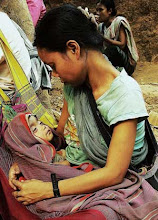
Displaced Christian children do their homework in a room in al-Saida monastery in Al-Qosh village, 45 km (28 miles) north of Mosul October 18, 2008. Christians have become targets of sectarian attacks. Such is the plight of some 1,500 Christian families who in the past two weeks have fled homes in Iraq's ethnically mixed, and stubbornly violent, city of Mosul. Picture taken October 18, 2008.
REUTERS/Thaier al-Sudani
AL-QOSH, Iraq-A Christian family huddles in an austere room in a monastery in northern Iraq, their belongings piled up around them. It is now home, since members of their religious minority became targets of sectarian attacks.The father, an engineer who was so scared that he asked to keep his name and that of his family unidentified, rushed his wife and two daughters to the Chaldean Catholic al-Saida monastery at the foot of arid mountains in northern Iraq on October 9, a day after hearing that four fellow Christians were killed."The explosions continue. There is no safety," he says with his youngest daughter draped on his lap.Such is the plight of some 1,500 Christian families who in the past two weeks have fled homes in Iraq's ethnically mixed, and stubbornly violent, city of Mosul.U.S., U.N. and Iraqi officials have condemned the attacks, which some in Iraq believe could foreshadow renewed bloodshed even as violence drops sharply across the country.The exodus of close to half of Mosul's Christians shows the fragility of security gains, especially in areas where cultures, religions and ethnicities collide. It also raises the specter of violence ahead of provincial elections that could alter the power balance in strategic cities like Mosul.So far, no one has taken responsibility for the deaths of about 12 Christians this month, which were followed by death threats and property attacks that prompted thousands to flee.Christians whisper that they are targets of a systematic campaign against them. Some blame Islamic militants, while others quietly point a finger at Mosul's politically powerful Kurdish minority. Most are too frightened to go into details.
To read more go to:
As in the days of Noah...

Son of Pastor Bike Zhang in Critical Condition after Severe Beating from PSB officials

BEIJING – ChinaAid has learned that Zhang Jian, the elder son of Pastor “Bike” Zhang Mingxuan, was severely beaten by Public Security Bureau (PSB) officials while at home with his mother, Xie Fenglan, in Beijing on October 16. Xie Fenglan testified that at about noon Beijing time, 15 Beijing PSB officers entered their residence and secured the exits before severely beating Zhang Jian with iron bars for 25 minutes. As Zhang Jian lay bleeding profusely, his mother called an ambulance, but the receptionist told her that a higher government authority gave a directive not to dispatch any ambulance to rescue her son because he is related to Pastor Bike Zhang. Zhang Jian’s mother then called her younger son, Zhang Chuang, who rushed to the house where he was also beaten by the same authorities. After some time, a personal friend of the Zhang family was able to take Zhang Jian to the Beijing Min Hang (Aviation) Hospital emergency room where Zhang Jian remains now. His doctor said Zhang Jian’s right eye may lose sight forever because of the severe damage resulting from the repeated beating. Pastor Bike Zhang, who was traveling in Yunnan province at the time, is currently unable to be contacted. It is assumed that he has been detained by authorities.
Pastor Bike Zhang’s wife, Xie Fenglan, was kicked out of her legally rented apartment, located at Room 206-102 at the Beijing Olympic Garden apartments, after her elder son Zhang Jian was sent to the hospital. The family’s furniture was thrown into the street. Government authorities ordered all hotels in Beijing not host her so she is now residing at Dr. Fan Yafeng’s home. Dr. Fan, a house church leader in Beijing, is an internationally renowned Chinese Constitutional law scholar and rights defender.
ChinaAid strongly condemns the unjust and criminal actions of the Chinese government. The brutal and unprovoked assaults on innocent civilians are acts of desperation and cowardice of a regime that has continued to ignore basic human rights and freedoms despite outcries from the international community. These reprehensible acts by the Chinese government should serve as a reminder to the international community that the Communist Party of China is only interested in self-preservation and will gladly sacrifice its own citizens’ freedoms in order to maintain its corrupt power.
During the past 22 years, Pastor Bike and his family members have been arrested, beaten and evicted from their home numerous times because of their Christian faith, yet he and his family continue to serve the house church Christians in Beijing.
Voice your concern for this incident by contacting:
Chinese Embassy in Washington DC
Address: 2201 Wisconsin Avenue, N.W.,
Washington D.C. 20007
Tel: (202) 338-6688,(202)5889760
Fax: (202) 588-9760
http://www.chinaaid.org/
http://www.monitorchina.org/


As in the days of Noah...

Iraqi Christians Targeted

Christians flee Mosul after threats, attacks: UNHCR

GENEVA-About half of the Christians in Iraq's northern town of Mosul, nearly 10,000 people, have fled in the past week after attacks and threats, the United Nations refugee agency said on Friday.The U.N. High Commissioner for Refugees said Iraq's ministry of displacement and migration had reported that about 1,560 families or 9,360 people left Mosul. UNHCR could not confirm the figure but was concerned about the mass displacement."The displaced population would represent about half of the Christians in the Mosul area," UNHCR spokesman Ron Redmond told a news briefing in Geneva.Most Christian Iraqis had decided to leave Mosul following "direct as well as indirect threats and intimidation," he said.Printed threats had been received on the university campus, in homes and on text messages sent to mobile phones, Redmond said. "We really don't have a firm indication or do people we've talked to know exactly where the threats are coming from."Mosul, 390 km (240 miles) north of Baghdad, remains one of Iraq's most restive cities even as violence has dramatically dropped elsewhere in the country.The Iraqi authorities and the U.S. military says that al Qaeda, the Sunni Islamist militant group allied to Osama bin Laden that Washington blames for much of Iraq's violence, are still active in Mosul.At least a dozen people were wounded in a series of bomb explosions on Tuesday and Wednesday in the city, and at least two insurgents were killed in clashes with police.Most of the Christians who fled Mosul are staying with relatives in surrounding areas, while some have gone as far as Dahuk and Arbil, Redmond said.
To read more go to:
As in the days of Noah...

Tuesday, October 14, 2008

Shariah sentence threatens Christian woman's family:'All of their children and grandchildren would be registered as Muslims'

Lawyers for a woman arrested for living as a Christian despite her father's conversion to Islam when she was a child now worry that her country's confusing blend of national and Shariah legal systems may result in a punishment that sweeps through her entire family, even down to her grandchildren.As WND reported, Christian sisters Shadia Ibrahim and Bahia El-Sisi of Egypt were surprised in their late 40s to learn that their father had briefly converted to Islam when they were children.Under Egyptian law, their father's conversion made the sisters Muslim for life, so they were convicted of fraud for putting "Christian" on their identity documents, including Bahia's marriage certificate.Now, a lawyer for Bahia worries if the courts enforce her legal identity as a Muslim, her entire family could pay the price.According to Islamic jurisprudence, parental custody is awarded to whichever parent has the "superior" religion, and no non-Muslim is allowed jurisdiction over a Muslim.In other words, Bahia's legally dictated status as a Muslim could mean that her husband would be compelled to convert to Islam or have their marriage nullified. Her children, too, would be reclassified as Muslim, creating the same problem for their Christian spouses and their children."All of their children and grandchildren would be registered as Muslims," attorney Peter Ramses told Compass Direct News. "(The ruling) would affect many people."The sisters were charged with fraud even though they didn't know that according to Egyptian law, their father's conversion in 1962 made them Muslim, the South African Press Association reported.Their father, Nagui Ibrahim, left home and converted to Islam when the sisters were very young. He reconciled with his wife three years later and re-converted to Christianity. In the process, he had someone forge his personal identity documents to say he was Christian.The man who forged Nagu Ibrahim's documents was detained in 1996 for falsifying dozens of documents and confessed to changing Ibrahim's papers, SAPA reported.When the two daughters visited the man who had helped their father, according the Egyptian national weekly Watani, they were detained and accused of forging their Christian identification documents.Convicted of fraud, Shadia later served time in prison while her sister, Bahia, went into hiding, reports Compass Direct News. When Shadia's sentence was retracted two months later following rallies and legal pressure from various organizations, Bahia resurfaced.But last month, despite the retraction in her sister's case, a judge sentenced Bahia to three years in prison for "forgery of an official document," her marriage license."This is a sick environment that we struggle to change," said Youssef Sidhom, editor-in-chief of Watani. "According to what is taking place here freedom is protected and provided for Christians to convert to Islam while the opposite is not provided.""How can the government say to (someone) who has lived 50 years in a Christian way that they must become a Muslim and their children must be Muslim and their whole family must all be Muslims?" asked Ramses. "This is very important for the freedom of religion." Ramses has vowed to appeal Bahia's case to Egypt's Supreme Court. He told Compass Direct News he worries that if the judges decide against Bahia, it might endanger the already precarious position of religious minorities in the Muslim-dominated country.Other legal sources assured Compass Direct News that the court is likely to agree with Ramses and follow her sister's path by retracting Bahia's sentence.
by Drew Zahn
As in the days of Noah...

Terrified Christian Families Flee Iraq's Mosul

BAGHDAD-Hundreds of terrified Christian families have fled Mosul to escape extremist attacks that have increased despite months of U.S. and Iraqi military operations to secure the northern Iraqi city, political and religious officials said Saturday.Some 3,000 Christians have fled the city over the past week alone in a "major displacement," said Duraid Mohammed Kashmoula, the governor of northern Iraq's Ninevah province. He said most have left for churches, monasteries and the homes of relatives in nearby Christian villages and towns."The Christians were subjected to abduction attempts and paid ransom, but now they are subjected to a killing campaign," Kashmoula said, adding he believed "Al Qaeda" elements were to blame and called for a renewed drive to root them out.Political and religious leaders interviewed said the change in tactics may reflect a desire on the part of extremists to forcibly evict all Christians from Iraq's third largest city. Earlier this week, Chaldean Archbishop Louis Sako said he was worried about what he termed a "campaign of killings and deportations against the Christian citizens in Mosul."Mosul police have reported finding the bullet-riddled bodies of seven Christians in separate attacks so far this month, the latest a day laborer found on Wednesday. On Saturday, militants blew up three abandoned Christian homes in eastern Mosul, police said.Father Bolis Jacob of Mosul's Mar Afram Church said he was at a loss to understand the violence."We respect the Islamic religion and the Muslim clerics," he said."We don't know under what religion's pretexts these terrorists work."The violence in Mosul occurs despite U.S.-Iraqi operations launched over the summer aimed at routing Al Qaeda in Iraq and other insurgents from remaining strongholds north of the capital.The killings come as Christian leaders are lobbying parliament to pass a law setting aside a number of seats for minorities, such as Christians, in upcoming provincial elections, fearing they could be further marginalized in the predominantly Muslim country.Iraq's Christian community has been estimated at 3 percent of Iraq's 26 million people, or about 800,000, and has a significant presence in the northern Ninevah province.In Mosul, where Christians have lived for some 1,800 years, a number of centuries-old churches still stand. Joseph Jacob, a professor at Mosul University, said there were nearly 20,000 Christians in the city before the 2003 U.S. invasion. But over half have since left for neighboring towns, or new countries, he said.Islamic extremists have frequently targeted Christians since the invasion, forcing tens of thousands to flee Iraq. Attacks had tapered off amid a drastic decline in overall violence nationwide, but that appears to be changing with the deaths this month.On Saturday, Bashir Azoz, a 45-year-old carpenter, said he was forced to flee his home in the city's eastern Noor area after gunmen warned a neighbor the day before to leave or face death."Where is the government and its security forces as these crimes take place every day?" asked Azoz, who is now staying with his wife and three children in a monastery in the Christian-majority town of Qarqoush, east of Mosul.Separately on Saturday, a U.S. soldier died when a bomb exploded near his vehicle outside Amarah, southeast of Baghdad. The U.S. military said it was withholding soldier's name until it notified next of kin.
As in the days of Noah....

Two Pakistani Christians accused of desecrating Quran

All Pakistan Minorities Alliance (APMA) chief calls for repeal of Pakistan blasphemy laws...
FAISALABAD, PAKISTAN-A Pakistani Christian man and his daughter have been arrested by the police after they were accused of desecrating the Quran, the Muslim holy book, in Gojra, a famous village of Tehsil Jhumra in district Faisalabad in Punjab province in Pakistan.ANS has learnt that a seven year old son of Gulsher named Amsal picked a polythene bag from the street and brought it to his home on October 8.The child gave the bag to his 18 year old sister, Sandal, who found torn pages of Quran among the contents of the bag.Sandal gave the bag to her female Muslim neighbor, asking her to give it the local cleric.A Muslim lady, Samina bibi, a resident of the area, had a minor clash with Gulsher’s family some time back. She had then allegedly threatened Gulsher’s family with dire consequences.In an apparent bid to settle personal scores with Gulsher’s family, Samina alleged that Gulsher and Sandal had desecrated pages of Quran before handing them to their Muslim neighbor.Local clerics made announcements from minarets of mosques to make the “desecration” public with a view to incite Muslims to attack the “blasphemers”.On October 9, hundreds of angry Muslims came out of their houses after learning about the alleged desecration of the Quran. The charged mob attacked Gulsher’s house but the police managed to pull the family out of harm’s way.The local Muslims later pressured the police to lodge a blasphemy case against Gulsher and Sandal.A case vide, Police First Information report no. 396/2008 under section 295-B, which carries life imprisonment if convicted, has been filed against the accused by one Farooq Alam, a complainant in the case.ANS has learnt that Farooq denied witnessing any desecration either by Gulsher or Sandal.He reportedly told the police that he had been told that Gulsher and Sandal had committed profanity.The police presented Sandal, one of the accused, before a magistrate. Eric Sandhu, APMA lawyer and district legal coordinator of Faisalabad defended Sandal in the court.He pleaded in the court that the Christian teenage girl is innocent and prayed the court that she be granted post-arrest bail. The magistrate sent her to district jail Faisalabad after refusing post-arrest bail plea.A Muslim mob maintained its presence outside the court. They chanted slogans against the accused and their family. Talking to ANS the Chief of All Pakistan Minorities Alliance, a leading umbrella organization of Pakistan minorities, Shahbaz Bhatti said that the APMA team members from Jhumra, a nearby village, and from Faisalabad rushed to the scene of incident and rescued the endangered family with the help of the Police.Sensing danger to the lives of the rest of family members, the APMA members have moved them to safety, Shahbaz told ANS. He said he would also take up the case with the higher authorities. Lamenting the misuse of Pakistan’s controversial blasphemy laws, he said the law had become a death warrant in the hands of extremists, who he said were already bent upon destabilizing the country. Shahbaz called for repeal of all discriminatory laws including Pakistan blasphemy laws. The APMA has also taken up the case of Dr. Robin, a resident of district Hafizabad and other blasphemy accused as well. Shahbaz expressed optimism that Dr. Robin would be acquitted. The APMA Chief said that the APMA lawyers would defend the accused. He said the APMA will extend needed support and assistance to the family members of the accused. He said that the fresh blasphemy case was a clear example of misuse of the disputed laws. “The case is baseless, fallacious, concocted and based on personal enmity with the accused”, he remarked. Shahbaz appealed for prayers for the protection and release of Gulsher and his daughter.
By Sheraz Khurram Khan
Special Correspondent for ASSIST News Service in Pakistan
As in the days of Noah...

India church: 50,000 flee anti-Christian clashes;Dozens of 'sacrificial lambs' killed in violence blamed on Hindu hard-liners

NEW DELHI - Indian church leaders said Tuesday that Christians killed in recent clashes were "sacrificial lambs" targeted by hard-line Hindus seeking an advantage in upcoming national elections.The All India Christian Council said the toll after nearly two months of sporadic violence has reached 59 dead and 50,000 displaced. Officials in the eastern state of Orissa, site of the worst violence, say 34 people have been killed. The recent violence began after Hindu activists blamed Christians for the slaying of a Hindu leader killed in Orissa on Aug. 23. Retaliatory attacks left scores dead, dozens of churches destroyed and thousands of people homeless, despite the government's claim that Maoists killed the Hindu leader."A frenzied and well-armed band of political criminals has threatened our community as perhaps it has never been in its 2,000 year-old history in India," said John Dayal, secretary-general of the All India Christian Council.There is a long history of tension between the religious groups in Orissa because Hindu leaders accuse Christian missionaries of forcing low-caste Hindus to convert, charges denied by Christian leaders.Leaders from the council on Tuesday said the violence was led by hard-line Hindu parties preparing for national elections, expected early next year, by whipping up religious fervor."The sole motive is to gain political advantage in coming national elections," said Dayal. "We have been made sacrificial lambs."The Christian leaders blamed the violence on radical Hindu groups, including the Bajrang Dal and the World Hindu Council, organizations loosely affiliated with the hard-line Bharatiya Janata Party. The BJP rules Orissa and Karnataka, the two states that have seen anti-Christian violence, and is looking to challenge the ruling Congress Party for power in New Delhi.Roughly 2.5 percent of India's 1.1 billion people are Christians, while more than 80 percent are Hindu. India is officially a secular nation.The Christian leaders called Tuesday for a federal probe into the violence.

As in the days of Noah...

Iraqi Christians Flee Mosul

Iraqi officials to probe attacks on Christians

MOSUL, Iraq-Iraq's government pledged on Tuesday to send senior officials to northern Iraq to tackle violence against Christians which has led thousands to flee their homes fearing for their lives."The cabinet stressed the need to move quickly to support the security effort with intensive military operations to restore security and order in Mosul and to reassure citizens," government spokesman Ali al-Dabbagh said in a statement.Dabbagh said the government would send a cabinet-level delegation to Mosul, an ethnically mixed city where hundreds of Christian families have fled their homes in recent days, to investigate this "painful situation."Yunadim Kanna, a Christian lawmaker, said more than 1,500 families had left following recent killings of Christians.The government of Prime Minister Nuri al-Maliki, a Shi'ite Muslim, has condemned the attacks and has sent more than 1,000 police to keep watch over the Christians in the city, some 390 km (240 miles) north of Baghdad.Kanna, who met Maliki along with other Christian officials Monday, said the situation had stabilized somewhat. "We expect these areas to be controlled, and the families to return to their homes in coming days," he said. Major-General Ali Ghaidan, commander of Iraqi ground forces, said the fruits of the recent crackdown would soon be visible, attributing the exodus to "media exaggeration that gave rise to fear and horror among these families...even if no threat was received."The targeted violence in Mosul has brought renewed attention to the plight of Iraq's Christians, who number in the hundreds of thousands and who have tried to keep out of violence between Muslim sects in the past four years.A number of Christian clergy have been kidnapped and killed in Iraq and churches have been bombed since the 2003 U.S.-led invasion. The Chaldean Catholic archbishop of Mosul was kidnapped in February and his body was found two weeks later...
To read more go to:
http://www.reuters.com/article/worldNews/idUSTRE49A36220081014
As in the days of Noah....

Monday, October 13, 2008

Iraq: Christian businessman killed in Mosul

Iraqi Christian families fleeing their homes after attacks that killed 11 members of the Christian community. The United Nations has voiced its concern after more Christian families fled the northern Iraqi city of Mosul.(AFP/File)
BAGHDAD-A Christian music store owner was shot to death in Mosul, Iraqi police said Monday-the latest in a series of killings that has caused thousands of members of the religious minority to flee the northern city.Religious leaders have called for action to stop the apparent Sunni insurgent campaign against Christians. Government officials have responded by announcing new security measures and plans to send troop reinforcements to the area.Gunmen stormed into the businessman's store late Sunday in an eastern part of the city, killing him and wounding his teenage nephew, according to a police officer in the regional security operations center.He spoke on condition of anonymity because he wasn't authorized to release the information.The attack came as government spokesman Ali al-Dabbagh said the national security council had decided to form a committee to investigate the problem.The government also would send additional Iraqi forces to the area to assure "the Christians of the government's commitment to their security and protection," he said.Violence has continued in the area despite U.S.-Iraqi operations launched in May aimed at routing insurgents from Mosul, which the U.S. military at the time dubbed al-Qaida in Iraq's last urban stronghold.Christian leaders also are lobbying parliament to pass a law setting aside a number of seats for them and other minorities in upcoming provincial elections, fearing they could be further marginalized in the predominantly Muslim country.U.N. special representative Staffan de Mistura expressed concern "at the spike in violence that has targeted the Christian communities in recent days" and warned the attacks were seeking to "fuel tensions and exacerbate instability at a critical time."Islamic extremists have frequently targeted Christians since the 2003 U.S. invasion, forcing tens of thousands to flee the country. Attacks had tapered off amid a drastic decline in overall violence nationwide, but concerns are rising about the deaths this month in Mosul.There were conflicting reports about the number of Christians who have fled the city.The senior migration and displacement official in Mosul, Jawdat Ismaeel, said the latest figures show that 1,092 families have fled the city. The number could not be independently verified. Most have left for churches, monasteries and the homes of relatives in nearby Christian villages and towns.But the U.N. envoy said just over 500 families were being assisted in the area, adding that many of the newly displaced Christians had previously fled to Mosul to escape violence in Baghdad.Elsewhere in Iraq on Monday, Iraqi police and witnesses said clashes broke out briefly in Baghdad's Shiite district of Sadr City after a roadside bomb targeted a U.S. patrol. The U.S. military did not immediately respond to a request for comment.No serious casualties were reported. But the fighting reflected rising tensions amid U.S.-Iraqi negotiations over a security deal that would extend the presence of American forces in Iraq beyond the end of the year.Separately, Iraqi Prime Minister Nouri al-Maliki said the 4,100 British troops in southern Iraq are no longer necessary to provide security, although some might be needed for training and technical issues, a newspaper reported Monday."Definitely, the presence of this number of British soldiers is no longer necessary. We thank them for the role they have played, but I think that their stay is not necessary for maintaining security and control," al-Maliki told The Times of London in an interview."There might be a need for their expertise in training and some technical issues, yes, but as a fighting force, I do not think it is necessary," he said.His comments were in line with an August report that most of Britain's contingent in Iraq would be withdrawn over the next nine months, leaving only a few hundred soldiers there.In July, British Prime Minister Gordon Brown promised a major troop withdrawal in the early months of 2009, but Britain's military has said it's premature to discuss specific figures.
http://news.yahoo.com/s/ap/20081013/ap_on_re_mi_ea/ml_iraq;_ylt=AlLPctCh0IsSOV6X0rnEXL.bOrgF
As in the days of Noah....

Hanged for Being a Christian in Iran

Life for Rashin Soodmand, her siblings and her mother became extremely difficult after her father was executed in Iran for the 'crime' of abandoning his religion Photo: PAUL GROVER
Hossein Soodmand (left), Rashin's father, was the last man to be executed in Iran for apostasy. Her brother Mashad is now in death row awaiting the same fate
Eighteen years ago, Rashin Soodmand's father was hanged in Iran for converting to Christianity. Now her brother is in a Mashad jail, and expects to be executed under new religious laws brought in this summer...
A month ago, the Iranian parliament voted in favour of a draft bill, entitled "Islamic Penal Code", which would codify the death penalty for any male Iranian who leaves his Islamic faith. Women would get life imprisonment. The majority in favour of the new law was overwhelming: 196 votes for, with just seven against.Imposing the death penalty for changing religion blatantly violates one of the most fundamental of all human rights. The right to freedom of religion is enshrined in the Universal Declaration of Human Rights, in the International Covenant on Civil and Political Rights, and in the European Convention of Human Rights. It is even enshrined as Article 23 of Iran's own constitution, which states that no one may be molested simply for his beliefs.And yet few politicians or clerics in Iran see any contradiction between a law mandating the death penalty for changing religion and Iran's constitution. There has been no public protest in Iran against it.David Miliband, Britain's Foreign Secretary, stands out as one of the few politicians from any Western country who has put on record his opposition to making apostasy a crime punishable by death. The protest from the EU has been distinctly muted; meanwhile, Germany, Iran's largest foreign trading partner, has just increased its business deals with Iran by more than half. Characteristically, the United Nations has said nothing.It is a sign of how little interest there is in Iran's intention to launch a campaign of religious persecution that its parliamentary vote has still not been reported in the mainstream media.For one woman living in London, however, the Iranian parliamentary vote cannot be brushed aside.Rashin Soodmand is a 29-year-old Iranian Christian. Her father, Hossein Soodmand, was the last man to be executed in Iran for apostasy, the "crime" of abandoning one's religion. He had converted from Islam to Christianity in 1960, when he was 13 years old. Thirty years later, he was hanged by the Iranian authorities for that decision.Today, Rashin's brother, Ramtin, is also held in a prison cell in Mashad, Iran's holiest city. He was arrested on August 21. He has not been charged but he is a Christian. And Rashin fears that, just as her father was the last man to be executed for apostasy in Iran, her brother may become one of the first to be killed under Iran's new law.Not surprisingly, Rashin is desperately worried. "I am terribly anxious about him," she explains. "Even though my brother is not an apostate, because he has never been a Muslim-my father raised us all as Christians-I don't think he is safe. They assume that if you are Iranian, you must be Muslim."Her brother's situation has ominous echoes of her father's fate. Rashin was 14 when her father was arrested. "He was held in prison for one month," she remembers. "Then the religious police released him without explanation and without apology. We were overjoyed. We thought his ordeal was over."But six months later, the police came back and took her father away again. This time, they offered him a choice: he could denounce his Christian faith, and the church in which he was a pastor – or he would be killed. "Of course, my father refused to give up his faith," Rashid recalls proudly. "He could not renounce his God. His belief in Christ was his life – it was his deepest conviction." So two weeks later, Hossein Soodmand was taken by guards to the prison gallows and hanged.Life for Rashin, her siblings and her mother became extremely difficult. Some Muslims are extremely hostile to people of any other religion, never mind to those who they consider apostates: Ayatollah Khomeini declared that "non-Muslims are impure", insisting that for Muslims to wash the clothes of non-Muslims, or to eat food with non-Muslims, or even to use utensils touched by non-Muslims, would spoil their purity.The family was supported with financial and other help from a Christian church based in Iran. That support became even more critical as Rashin's mother began to lose her sight.Rashin herself was eventually able to leave Iran. She now lives in London, married to a fellow Christian from Iran who successfully applied for asylum in Germany.It took years for Rashin to understand how her father could have been legally executed simply for becoming a Christian. In 1990, there was no parliamentary law mandating the death for apostates. What, then, was the legal basis for Hossein Soodmand's execution?
"After the revolution of 1979, Iran's rulers wanted to turn Iran into an Islamic state, and to abolish the secular laws of the Shah," explains Alexa Papadouris of Christian Solidarity Worldwide, a human rights organisation that specialises in freedom of religion. "So the clerics instituted a mandate for judges presiding over criminal cases: if the existing penal code did not include legislation on whether a certain kind of behaviour is an offence, then the judges should refer to traditional Islamic jurisprudence." In other words: sharia law."That automatically created problems" says Mr Papadouris, "because Islamic jurisprudence is not codified law: it is a series of formulations developed across generations by scholars and clerics. Depending on the Islamic school or historical era, these formulations can differ and even contradict each other."On one subject, however, sharia law is unequivocal: men who change their religion from Islam must be punished with death. So when the judge heard the case of Rashid's father, he could refer to sharia and reach a straightforward decision: the death penalty. There was no procedure for appeal.Nevertheless, in the 18 years since Hossein Soodmand's execution, there have been no judicially sanctioned killings of apostates in Iran, although there have been many reports of disappearances and even murders. "As the number of converts from Islam grows," notes Ms Papadouris, "apostasy has again become a serious concern for the Iranian government." In addition to 10,000 Christian converts living in Iran, there are several hundred thousand Baha'is who are deemed apostates.There is another factor: President Ahmadinejad. "The President didn't initiate the law mandating the death penalty for apostates," says Papadouris, "but he has been lobbying for it. It is an effective form of playing populist politics. The Iranian economy is doing very badly, and the country is in a mess: Ahmadinejad may be calculating that he can gain support, and deflect attention from Iran's problems, by persecuting apostates."The new law is not yet in force in Iran: it requires another vote in parliament, and then the signature of the Ayatollah. But that could happen within a matter of weeks. "Or," says Papadouris, "it could conceivably be allowed to drop, were there a powerful enough international outcry".Time may be running out for Rashin's brother. She believes that the new law will be applied in an arbitrary fashion, with individuals selected for death being chosen to frighten others into submission. That is why she fears for her brother. "We just don't know what will happen to him. We only know that if they want to kill him, they will."
by Alasdair Palmer
As in the days of Noah....

Houses blown up as Christians flee Iraq's Mosul

MOSUL, Iraq-Militants blew up three empty Christian homes on Saturday in the northern Iraqi city of Mosul, where more than 800 Christian families have fled in the past two days, a Christian member of parliament said."I have been informed that three houses have been blown up. In two of them, the families were already displaced. The third, they evacuated the family and then blew up the house," parliamentarian Unadim Kanna told Iraqiya state television. "More than 800 families have been displaced within two days," he said."The horror is continuing in the city, especially in the eastern side." "I appeal for the prime minister and the president to take responsibility, preserve security and allow the displaced families to return to their houses," he added.Kanna told the U.S. funded al-Hurra Arabic language television channel that the flight over the past two days was prompted by threats from people connected with the security forces."I can't accuse anyone (in particular), but of course they are forces with badges in their pockets, walking the streets-no one stops them-knocking on the doors of Christians."Police in Mosul confirmed that three empty houses belonging to Christians had been blown up on Saturday. Iraq's Christians, who number in the hundreds of thousands, have tried to keep a low profile during years of sectarian fighting in Iraq, but have occasionally been targeted, with churches attacked and priests kidnapped.In recent weeks, hundreds of Christians have taken to the streets in Baghdad and Mosul to protest against a provincial election law which deprives them of small quotas of seats in Nineveh, Baghdad and other provinces.The government has asked parliament to restore the quotas.U.S. forces say Mosul is where Sunni Islamist militants from al Qaeda have regrouped to make a stand after being driven from other parts of Iraq.
As in the days of Noah....

Wednesday, October 8, 2008

Christians in Iraq Protest End to Quotas They Claim Protects Fair Representation

BAGHDAD-Iraq's prime minister sought safeguards Sunday for small religious communities in this mainly Muslim country as Christians protested parliament's decision to stop setting aside seats for minorities on provincial councils.In Baghdad, a series of explosions struck mostly Shiite areas, killing at least 32 people and wounding nearly 100, police said. The attacks appeared aimed at reviving sectarian tensions that once threatened to plunge the nation into civil war.Parliament last week approved a new law mandating elections in most of Iraq's 18 provinces.But the law removed a system that reserved a few legislative seats for Christians and other religious minorities. Lawmakers cited a lack of census data to determine what the quotas should be. But many Christians saw the move as an effort to marginalize their community."I think that some political groups are pushing the remaining Christians to leave Iraq," worshipper Afram Razzaq-Allah said after services at a Catholic church in Baghdad. "They want us to feel that we are no longer Iraqis."In a letter sent to parliament Sunday, Prime Minister Nouri al-Maliki appealed to the legislators and the electoral commission to restore the quota system."The minorities should be fairly represented in the provincial councils and their rights should be guaranteed," al-Maliki wrote.Hundreds of Christians staged street protests after Sunday church services in and around Mosul, a northern city where many of the country's Christians live. Some said the removal of the quotas is an attempt to force them to leave Iraq."This is an unjust decision and it affects our rights as Christians," Matti Galia, a local politician, said at a rally in Mosul. "We are original citizens in this country. The politicians' goal was to divide the Iraqi people and create more struggles. Indirectly, they are telling us to leave Iraq." Iraq's Christians have been targeted by Muslim militants since the U.S.-led invasion in 2003, with priests, churches and Christian-owned businesses attacked. The violence has led many Christians to flee the country.Sectarian violence has receded since U.S. troop reinforcements were sent in last year. However, U.S. commanders have warned that extremist groups such as al-Qaida in Iraq are still trying to rekindle sectarian warfare to undermine the U.S.-backed Iraqi government.The string of explosions in the capital Sunday began near sundown as Muslims were preparing for Iftar, the meal that breaks the daily fast during the holy month of Ramadan.The deadliest blasts occurred in the Karradah neighborhood, where a parked car loaded with explosives blew up in a commercial area about 7 p.m., killing 19 people and wounding 72, police and hospital officials said.Police said that about 90 minutes earlier, two car bombs exploded nearly simultaneously in the Shurta Rabaa and Amil districts of west Baghdad, but the U.S. military said later that the car in Amil blew up due to an electrical fire.Twelve people were killed and 35 wounded in the Shurta Rabaa blast, and one person died and two were injured in the Amil explosion, police said.Also Sunday, snipers fired on an Iraqi army checkpoint, killing two soldiers and a civilian in the eastern Zayona neighborhood of Baghdad. A roadside bomb killed an Iraqi soldier on a patrol in Mansour, a mostly Sunni area in the city's west, police officials said.Two civilians were killed in an armed attack in the town of Khan Bani Saad by a group believed tied to al-Qaida, a police official in Diyala province said. The town is near the provincial capital of Baqouba.The same official said two Iraqi soldiers were killed and 10 wounded when a bomb targeted them in Balad Ruz, 45 miles northeast of Baghdad late Saturday.Also Sunday, an Iraqi official said the country signed preliminary deals with General Electric Co. and Siemens AG to upgrade the electricity grid, which has been ravaged by years of war, sanctions and neglect. Lengthy power outages have been common in Iraq, with some Baghdad areas getting as little as four hours of electricity a day. The problem has been a major cause of discontent during the summer when the heat is punishing.
As in the days of Noah...

Friday, October 3, 2008

Alex's Story - Trailer

Kenya:Islamists Attack Church

A longstanding effort to replace a church with a mosque in Kenya’s northern town of Garissa culminated in an attack by 50 Muslim youths recently that left the worship building in ruins.The gang stormed the building of Redeemed Gospel Church on 14 September and pelted the congregation with stones, sending many Christians fleeing while others became embroiled in fistfights.Ten Christians received hospital treatment for minor injuries and were released. Church leaders said the Muslim mob also destroyed pews, damaged the church building’s walls of corrugated iron, smashed the glass-mounted pulpit and burned the church banner with its stand, reports Compass Direct News.“We had just started the Sunday service when, without warning, a rowdy group of about 50 Muslim youths invaded the church, pelting stones at us and destroying our structures,” said the church youth chairman, identified only as Suma.Local media reported that the 10 church members were hospitalised, but a district nurse at the hospital told Compass that no-one was admitted due to the violence.A church elder at East Africa Pentecostal Church in Garissa, about 249 miles from Nairobi, confirmed that the church members were treated at the hospital and allowed to go home. Tensions between Christians and the Muslim-majority population in the semi-desert town of 20,000 people began simmering after Muslims built a mosque next to the church plot. Purchasing its land on in November 1999, the church had begun worshipping there by early 2001, eventually growing to 400 members. Church leaders complained to the district commissioner in June 2007 that the new mosque was built too close to the church-only three metres separate the two structures-and that it was blocking the church entrance.Officials had ruled that no further permanent structures were to be set up on the land by either party until a later date to be determined by the district commissioner.“The church faithfully obeyed, but the Muslims defied the orders and began immediately to put up a permanent structure,” according to the letter church leaders wrote to the district commissioner. The building of the mosque was allegedly sponsored by a wealthy Muslim in Garissa, according to the letter. “The problems between the church and the Muslims began and have escalated since then,” it states. Government security intelligence had reported that Muslims planned to destroy the church if it continued to operate within the residential area, District Commissioner (DC) Alois Okango told Compass. The administration had proposed a new site for the church to worship, Jamhuri Club, but two days before the attack church leaders wrote two letters to Okango saying they would remain worshipping in their building.Okango told Compass that to avert a crisis, the administration has decided that the church should relocate temporarily to a site near an agricultural showground.The government also advised the church to sell its property near the mosque and buy another piece of land, preferably outside Garissa town center.This suggestion, Okango told Compass, did not augur well with church members, who felt they had already established the church at the site and that it was the mosque that should be moving. “The Christians threatened to go and worship in the ruined premises if no action was taken,”Okango said.“They said they were ready to die for the sake of their faith.”The government is striving to avert further incidents by preventing the Christians from returning to the ruined structure, according to a Provincial Police official.
http://www.inspiremagazine.org.uk/news.aspx?action=view&id=2821
As in the days of Noah....

Thursday, October 2, 2008

Religious Murders Embarrass India

Anti-Christian violence, which began in a remote district of India’s tribal belt in the eastern state of Orissa in late August, has become an international embarrassment for India’s secular Congress-led government. It has spread to four more states, including Karnataka, the home of the subcontinent’s IT hub in Bangalore. On the sidelines of the signing of an Indo-French nuclear deal this week, Nicolas Sarkozy, the French president and current European Union president, said he had conveyed to Manmohan Singh, India’s prime minister, the EU’s “serious concerns” over “massacres of Christians”.Mr Singh has condemned the violence and asked state governments to step up security. The ruling coalition fears the rise in tensions between majority Hindus and the Christian minority could play into the hands of the opposition Hindu nationalist Bharatiya Janata party.“It is a bloody war, a systematically organised crime primarily targeting Christians,” says Dr Swarupananda Patra, president of the Orissa Minority Forum and local head of the YMCA, a non-government organisation running a relief camp for about 600 victims. The fear is the violence might spread to neighbouring Jharkhand and Chhattisgarh, which also have predominantly tribal populations, a large presence of Hindu nationalists, Maoists and a Christian minority.Attempts to restore peace to Kandhamal district, the epicentre of the religious riots, appear to have had little effect. Hindu crowds on Tuesday set fire to two, mostly Christian, villages, killing one Christian and burning a church. The authorities arrested at least 30 people and imposed an indefinite 24-hour curfew in nine towns in the district.In a relief camp in Bhubaneswar, Rabindra Nath Pradhan, a Christian of the Pana ethnic group, recounts the mob attack on his village.“First, they burnt down the church. Then they went to my brother’s house and burnt him alive,” he said. “They were shouting ‘Jai Shri Ram’,” the cry of Hindus hailing the warrior-god.Threatened with the imposition of presidential rule by New Delhi, the Orissa state government has reinforced the police and paramilitary presence in the hilly and inaccessible district 200km from Bhubaneswar, the state capital.At least 33 people, most of them Christians, have been killed in the district since the murder of a hardline Hindu priest there in late August. Maoists claimed responsibility and have threatened to kill 14 local leaders of the Hindu nationalist Vishnu Hindu Parishad and Rashtriya Swayamsevak Sangh for “inciting communal violence”.About 20,000 Christians in Kandhamal have taken refuge in state-run camps that remain off-limits to relief agencies and journalists. Christians who have lost their homes have been told they can return only if they convert to Hinduism.Another victim, a 30-year- old Pana Christian from the village of Sakadi, said she fled to the forest when a mob approached. As she surveyed the charred debris of her house the next morning, villagers told her she was no longer welcome: “Since you are Christian we cannot protect you. You’d better leave.”Members of the BJP, which rules the state in alliance with a regional party, deny that people are targeted for being Christian. “This is conflict between two communities,” says Jual Oram, a BJP member of parliament from Orissa.The former minister for tribal affairs in Orissa accuses the local Pana, of whom 95 per cent are Christian, of posing as Hindus to secure access to government jobs and education afforded to lower-caste Hindu’s under India’s job reservation laws.Villagers say Hindu militant outfits have been distributing a list of more than 12 Christians, who, they allege, were behind the killing of Swami Laxmanananda Sarawati, the priest. He is thought to have reconverted 50,000 Christians to Hinduism since he arrived in the state the late 1960s.Many observers believe that Hindu nationalists have turned an old conflict over identity, rights and entitlement between two communities into a religious one in a bid to win votes for the BJP in forthcoming national elections.The proxy war over faith is fought between the original inhabitants, the predominantly Hindu tribals of the Kandha ethnic group and the former Hindu Dalits – formerly known as “untouchables” – of the Pana ethnic group, who have converted in large numbers to Christianity to escape India’s caste system. According to India’s national census, the share of the Christian population in the Kandhamal district was 18.2 per cent in 2001. The proportion of Christians has risen rapidly, but it is not clear by how much because the district was created relatively recently.
By Tom Felix Joehnk in Bhubaneswar

As in the days of Noah...

Wednesday, October 1, 2008

Somali House Church Attacked for the Second Time

A muslim mob attacked a house church in tayeglow, a town 198 miles from Mogadishu, Somalia's capital. Dozens of muslim, including children and women, demolished the church and attacked the Christians worshipping at the church with spears, machetes, sticks and stones. Two elders of the church, Mr. Faysal Amin, 50, and Mr. Ibn Hamsho, 45 (not their real names for security reasons), suffered serious injuries as a result of the attack.The attack was probably in response to the conversion of the only son of a prominent muslim religious leader in the district.This is the second time that muslims have targetted the church for attack. In the first attack, which took place in 2007. a muslim gunman opened fire on the christians at the church and seriously wounded the pastor.The pastor of the church has not yet fully recovered from the injuries he suffered from the 2007 attack. Currently, his father, Mr. Yasin Seid (not their real names for seurity reasons), is the pastor of the church. Mr Seid suffered minor injuries during the latest attack.When muslims convert to christianity in Somalia, they face Death. In the past twelve months alone, five Somali converts to Christianity have been murdered. Even Somalis who live in neighboring countries such as Ethiopia and Kenya face persecution from their fellow Somalis.
http://www.persecution.org/suffering/newssummpopup.php?newscode=8618
As in the days of Noah...

Deadly Religious Clashes Claim Lives

Violent clashes between the Hindu and Christian community in the east of India have left at least 25 people dead. Trouble started after a Hindu missionary was allegedly killed by Christians, but the Indian Catholic Church says the unrest was staged by Hindus...

Somali insurgents want to raze non-Muslim places of worship

Gunmen killed Leonella Sgorbati, an Italian nun, in Mogadishu in 2006. She was buried in Kenya.
MOGADISHU, Somalia-Islamists began demolishing an old Roman Catholic church in southern Somalia on Tuesday to replace it with a mosque, and vowed to do the same with all other non-Muslim places of worship they find in the area.The act-and the threat-were the latest show of strength by the growing Islamic insurgency in and around the southern port of Kismayo. Somalia's third-largest city has been in the control of al-Shabab, a powerful Islamist faction, since August.Sheik Hassan Yakob Ali, a spokesman for al-Shabab, said the city's residents had knocked down a wall of the century-old Italian church, which has not been used for at least 18 years. No one was hurt in the demolition, Ali said.He said the city administration will finish the demolition job over the next few days and replace the building with a mosque."We have demolished a Christian church," Ali told The Associated Press. "And we'll replace it with an Islamic mosque. We will demolish all similar Christian cathedrals and other places of worship for Christians, Buddhists and other religions."Somalia is a mostly Sunni Muslim country, but it still contains a series of old Catholic churches that are a legacy of its colonial past under Italy. There are no known Buddhist temples in Somalia.Tuesday's demolition was scheduled to coincide with the Muslim holiday of Eid al-Fitr, which marks the end of the holy month of Ramadan. But it was not the only, or the most violent, attack against the Catholic Church in Somalia.In 2006, gunmen in Mogadishu shot and killed a 65-year-old Italian nun and her bodyguard. In 1989, the Bishop of Mogadishu, Pietro Salvatore Colombo, was killed at his cathedral in the Somali capital. After the bishop's assassination, the Vatican eliminated the post and now oversees Somalia through neighboring Djibouti.Ethiopian troops supporting Somalia's shaky United Nations-backed transitional government pushed the Islamists from power in December 2006, sparking an Iraq-style insurgency.Islamist fighters have carried out a series of hit-and-run attacks on towns across the country in the past few months, but Kismayo is the fist major city they have held.
Since 1991, Somalia has been without a functioning government. At the time, clan warlords ousted socialist dictator Mohamed Siad Barre, then began fighting each other.
As in the days of Noah....